

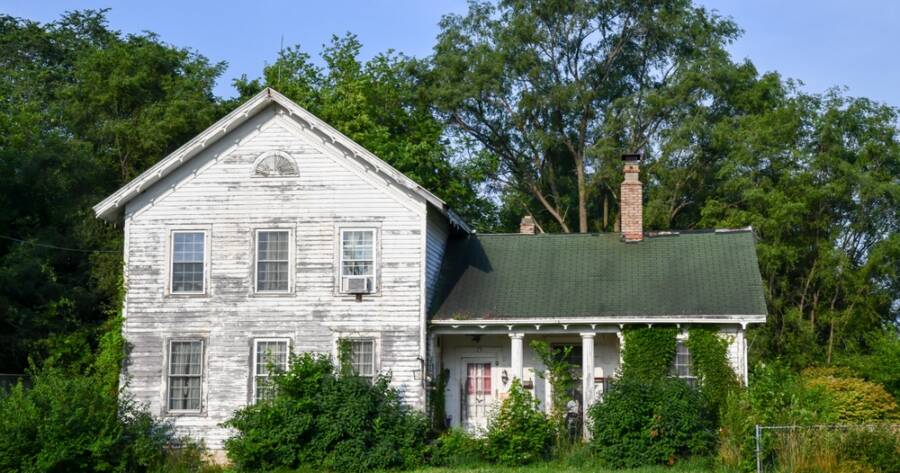
Empty homes can tell very different stories. Some are vacation properties used only part of the year, while others have fallen into neglect or abandonment. Across the United States, vacancy patterns vary sharply by region and can shape neighborhoods in lasting ways. Looking at the numbers helps separate common assumptions from what is actually happening in America’s housing stock.
The Scale of Vacant and Abandoned Housing in America
Vacancy remains a significant part of the U.S. housing market. In the second quarter of 2026, an estimated 15.6 million housing units nationwide were vacant, accounting for about 10.5% of the country’s total housing inventory. Vacant properties include year-round units as well as seasonal homes, so the figure should not be interpreted as a count of abandoned houses alone. (source)
The current numbers are actually a significant improvement from historical peaks. Vacant home counts reached close to 19 million following the 2008 housing crisis, but that figure fell by more than 20% between 2009 and 2024 as the market gradually recovered (source). Still, millions of properties remain sitting empty for a wide variety of reasons, from foreclosure and neglect to deliberate seasonal use.
Not All Vacant Houses Are Truly Abandoned
A common misconception is that every vacant property represents decay or neglect. Many vacant homes are not neglected properties at all. A substantial share are residences used only during certain parts of the year, including vacation homes and other properties intended for occasional occupancy (source). These are vacation cabins, beach cottages, ski chalets, and similar properties intentionally left empty for much of the year by their owners.
Census Bureau data shows that over 4.3 million vacant units across the country fall into the seasonal category, making it the dominant type of vacancy by volume (source). In 645 U.S. counties, seasonal residences accounted for 50% or more of the homes classified as vacant (source). These are not abandoned homes in the traditional sense — they are intentional absences tied to lifestyle and geography rather than economic distress.
Where Vacancy Rates Are Highest
Vacancy is not evenly distributed across the country. States in the Northeast and far North tend to carry the heaviest vacancy burdens, largely because of seasonal housing patterns. Maine recorded the highest statewide vacancy rate, with roughly one in every five homes sitting empty — the top rate in the nation (source). Vermont and Alaska followed closely behind, both states with large rural and recreational land areas that attract seasonal residents rather than year-round populations (source).
At the metropolitan level, the contrast is striking. Cape Coral-Fort Myers in Florida held the highest vacancy rate among the 75 largest metro areas, with 34.1% of homes vacant — a figure driven heavily by second-home ownership and seasonal migration patterns in that region (source). On the opposite end of the spectrum, New Haven-Milford in Connecticut recorded the lowest vacancy rate at just 4.0%, reflecting a tighter and more consistently occupied housing market (source).
How Abandoned Properties Affect Neighborhoods and Health
While many vacant properties are simply unused seasonal homes, truly abandoned buildings carry a different set of consequences — particularly for the communities surrounding them. Research from the Urban Institute highlights that blighted properties, including abandoned structures and vacant lots, create health impacts that are frequently invisible or delayed in their effects (source).
Since people spend much of their lives at home and within their neighborhoods, deteriorating housing conditions can have meaningful effects on both individual and family well-being (source). Abandoned buildings contribute to both mental health concerns and physical safety risks within neighborhoods, creating stressors that may not present themselves immediately but accumulate over time (source).
Researchers have suggested addressing blight through measures such as evaluating its health effects, monitoring outcomes in affected communities, and giving public health concerns a larger role in housing rules and local policy decisions (source). These approaches treat abandoned housing not simply as an aesthetic or economic problem, but as a genuine health infrastructure issue.
The Overlap Between Vacancy and the Housing Shortage
One of the more counterintuitive aspects of the abandoned house phenomenon is that it exists simultaneously with a widely reported shortage of available housing in many American markets. Millions of homes sit empty while prospective buyers and renters struggle to find affordable options, particularly in high-demand urban and suburban areas. This contradiction points to the uneven geographic distribution of vacancy — surplus housing in rural Maine or seasonal Florida does not solve a housing crunch in a competitive metro market.
The national vacancy rate dropped from 11.4% in 2010 to 9.7% by 2020 as economic recovery reshaped the post-crisis housing landscape (source). That downward trend suggests growing demand has absorbed at least some of the excess inventory built up during and after the housing bubble. However, hundreds of thousands of properties remain in limbo — too costly to rehabilitate, too distressed to sell, or too remote to attract new residents.
Communities dealing with concentrated abandonment face additional compounding challenges. Property tax revenue drops when homes fall out of productive use, reducing budgets available for maintenance of local infrastructure and services. Neighboring property values often decline, discouraging private investment in affected areas. Without targeted intervention, abandoned housing can anchor a neighborhood into decline rather than serving as a passive, neutral presence.
Why You Should Learn More About Abandoned Houses Today
Abandoned houses are far more than vacant structures. They reflect economic history, seasonal migration, policy decisions, and public health dynamics all at once. The data shows that tens of millions of Americans live in proximity to vacant properties, with consequences ranging from reduced neighborhood vitality to measurable health impacts.
Vacancy trends have improved since the post-crisis peak, but millions of properties remain unused, underscoring the complexity of the American housing market. Whether one is a homeowner, renter, policymaker, or simply a curious citizen, understanding how and why homes fall vacant offers important insight into how communities grow, shrink, and recover over time.